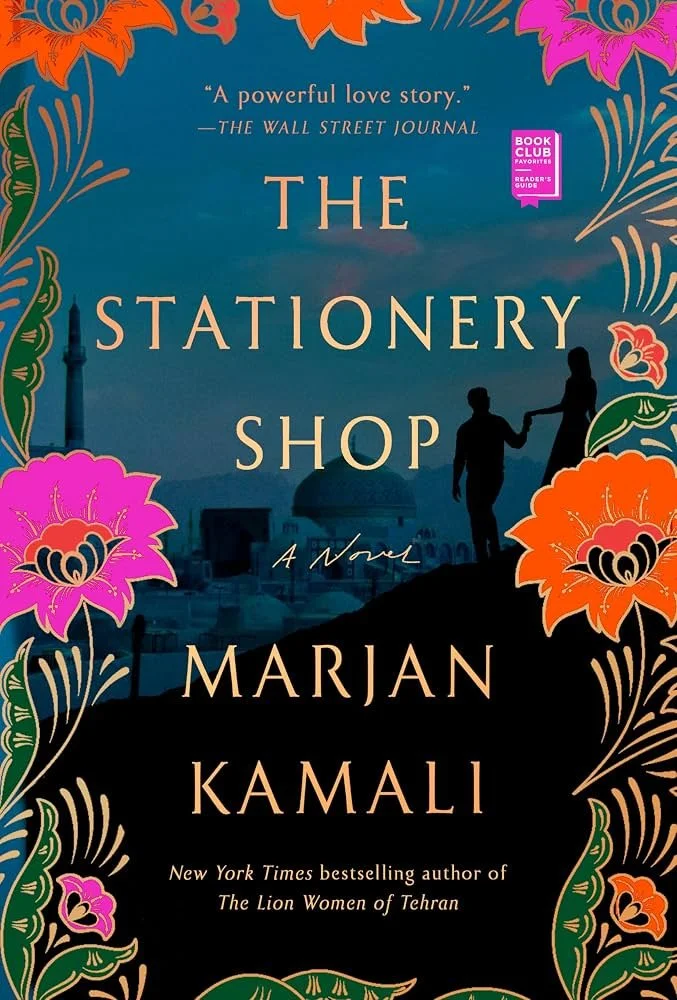
“The Stationery Shop” by Marjan Kamali
August 1, 2026
Marjan Kamali’s The Stationary Shop is, above all else, a beautiful love story. While it is undeniably a romance, it never feels overly sentimental or unrealistic. Roya and Bahman’s relationship is believable because it is shaped by love; but with something even more prevalent in the mysteries of life: fate.
I admired the way the book approaches Iranian history. Kamali allows politics to exist as the backdrop that naturally shapes her characters’ lives. The upheaval of Iran in the 1950s influences every decision they make, yet it never overshadows the emotional heart of the story. Instead, I found that the historical events create the obstacles through which the romance grows, which allowed me to experience the beauty of young love and the tragedy of living through political instability simultaneously.
One detail that really stood out to me was Roya’s name. “Roya” means “dream” in Farsi, and I thought it suited her story well. In many ways, she ends up living the life her parents dreamed of for her. She immigrates to the United States, builds a successful career, raises a family, and creates a home in New England. But despite all of that, Iran is never really behind her. It’s present in her memories, her values, the way she sees the world, and the relationships she holds onto. She spends her life between two places, never fully leaving one behind or fully belonging to the other. I think that’s something many immigrants, and even the children of immigrants, will recognize. It made Roya feel incredibly real to me, and her story became about much more than just a romance.
Bahman’s story provides an equally important perspective. He carries the weight of his homeland throughout his life as he remains connected to Iran and witnessing its continued struggles from afar. And despite everything that time and history take from him, he never loses the love that defined his youth. Kamali suggests that history can change the course of a life, but it cannot always sever the connections that truly matter. What is meant to endure finds its way back, even after decades apart.
Kamali also succeeds in making the reader feel transported. Reading The Stationary Shop feels like stepping into another era. The bustling streets of Tehran, the stationery shop itself, and the quiet moments shared between Roya and Bahman are written with such warmth that it becomes easy to imagine living alongside them. By the end, everyone has been shaped by loss in one way or another, but there’s still a sense of hope. The ending doesn’t tie everything up perfectly, and I think that’s what makes it so memorable. It feels honest, and I found myself thinking about the characters long after I finished the book.
Personally, I enjoyed The Stationary Shop even more than Kamali’s The Lion Women of Tehran. This book feels more intimate and emotionally grounded. This time, I think she successfully captures the complications of the Middle East but also the warmth, resilience, love, and richness of Iranian culture.