Creepy Crawlies, Lab Coats, and Paintbrushes? What You Didn’t Know about BioArt
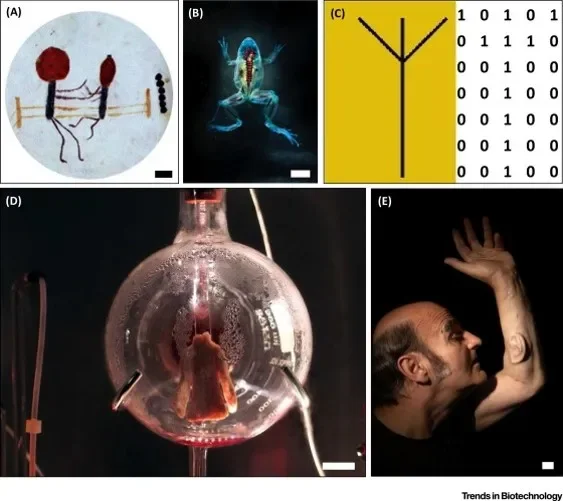
Photo courtesy of Grist
Art has never been confined to a canvas. Over time, it has moved into performance, sound, technology, and even living systems.
Now, a surprising new frontier is drawing the attention of both artists and scientists: bio-art.
What is bio-art? Fundamentally, it’s a crossover between art and science. The term first appeared in 1981, when Peter Weibel wrote “Biotechnology and Art,” and proposed that biological systems themselves could become artistic media. Since then, bio-art has grown into a movement that uses biological systems, such as living tissues, bacteria, plants, and even DNA, as creative material.
Bio-artists come from a range of backgrounds. Some are trained scientists, others are artists learning lab techniques along the way. Collaboration is common. While most are classified as artists, many spend just as much time in lab coats as they do in paint-splattered aprons.
One of the more unusual figures in bio-art is John Knuth, whose paintings are created with the help of flies. In his studio, Knuth feeds houseflies a mixture of sugar and watercolour pigment. As the flies move across the canvas, they leave behind small regurgitated droplets of colour. The result is a constellation of tiny marks that resemble abstract splatters. The works challenge the idea of the artist as the sole creator and turn insects into active participants in the artistic process.
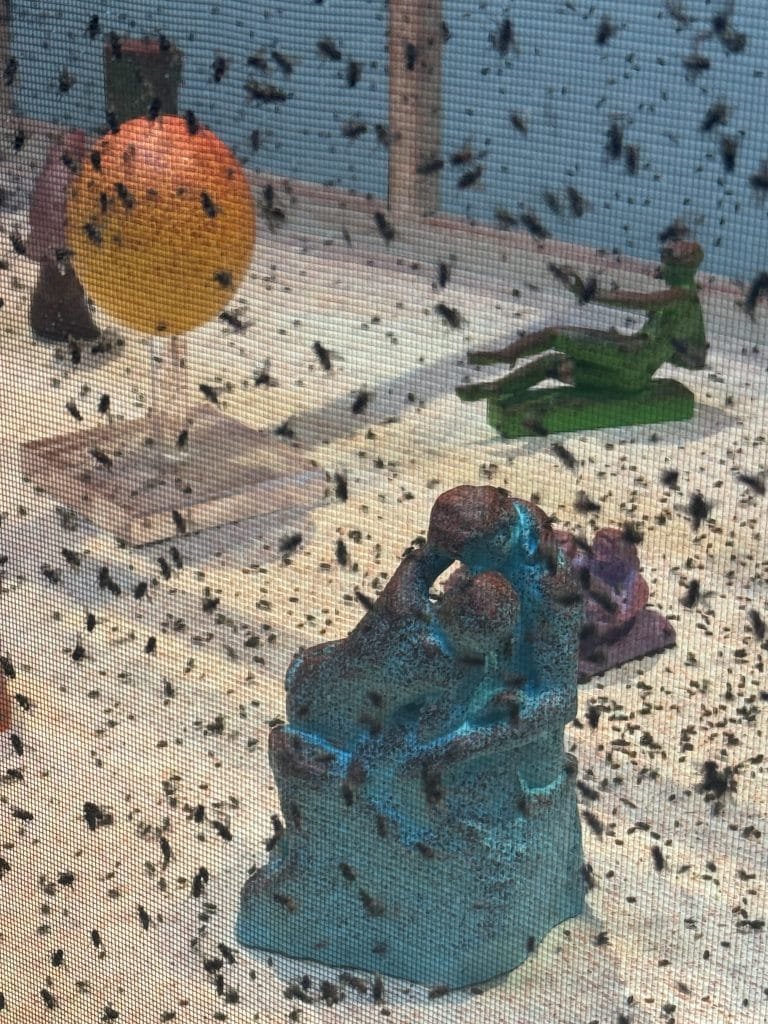
Photo courtesy of Artnet
As the field grows, so do debates about its boundaries and ethics. Is any artistic engagement with the life sciences considered bio-art, or only work made directly in the lab? Is it ethical to create or alter living beings for art? These questions are far from settled, and they continue to evolve as bio-art moves into the 2020s, with many artists now addressing issues like environmental sustainability and social justice.