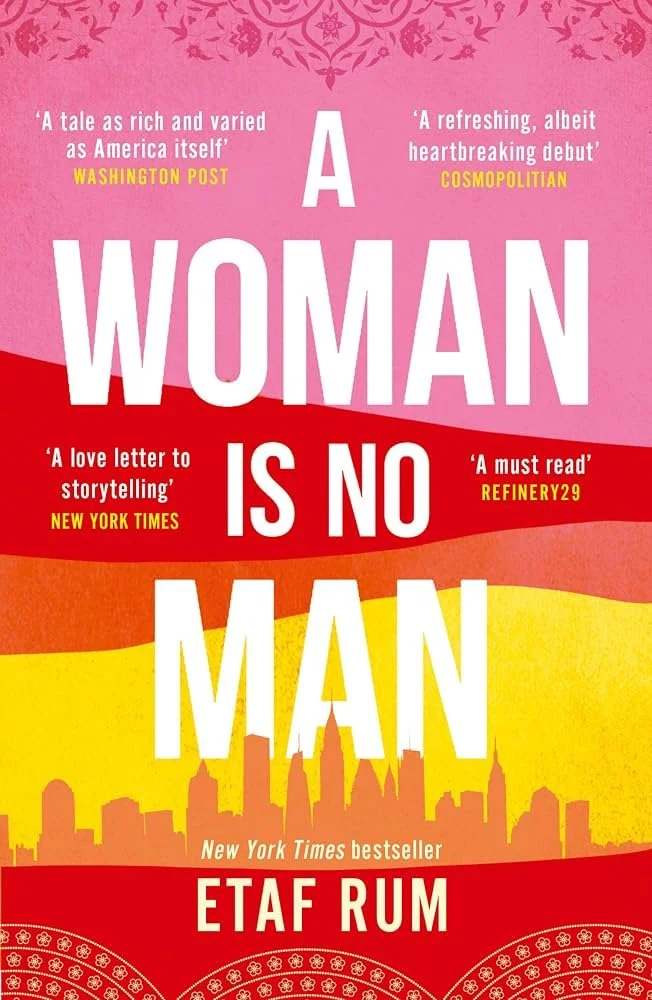
“A Woman Is No Man” by Etaf Rum
September 10, 2026
Although I finished this book a while ago, I haven’t fully put it down. There are so many moving parts of the story that keep rearranging the furniture in my head even after I closed it.
The premise follows three generations of Palestinian women in Brooklyn — Isra, her daughter Deya, and Isra’s mother-in-law (and Deya’s grandmother) Fareeda. At some point in the chronology, all three women live under the same roof but are eventually torn apart by abuse and cultural taboos. The novel toggles between Isra’s story in the 1990s and Deya’s in 2008, and the structure itself shows that history can be inherited in a person’s will but is not determinative of our fate.
If you share my sentiments about the novel, you’ll find it difficult to compromise Fareeda’s personality and role in the family. Fareeda is genuinely hard to like for most of the novel, and Rum doesn’t rush to explain her sympathy – she lets you sit with the discomfort of understanding someone without forgiving them. Fareeda is shaped by her own traumas, and arguably, she gave her family a life better than the one she was given. We want the people who raise us to do better than what was done to them, but it’s worth asking how fair that expectation really is. If Fareeda grew up in a refugee camp, then building a life for her family in America looks, by her own measure, like success. And yet that success is hard to reconcile with her enabling of domestic violence, and with the emotional and psychological abuse she inflicts.
We see this trauma passed down to Isra, who becomes a victim of the same cycle, even when in a different country. But the question the novel keeps circling back to is whether that cycle can actually be broken, and in Deya, we see it start to be.
I think many of us who will read this book will see reflections of our own lives and what it means to witness intergenerational change. By my age, my grandmother was already married with several children, and she never had the chance to finish school. Whereas I have a degree, I’m in law school, I’ve built a life of independence, and I’ve had the privilege of travelling and building projects and initiatives that started small and grew into something local, then national, then global. None of it ever required me to leave my culture or traditions behind. If anything, becoming better versions of ourselves is exactly what allows our culture to prosper and be honestly represented to people who don’t yet know it.